
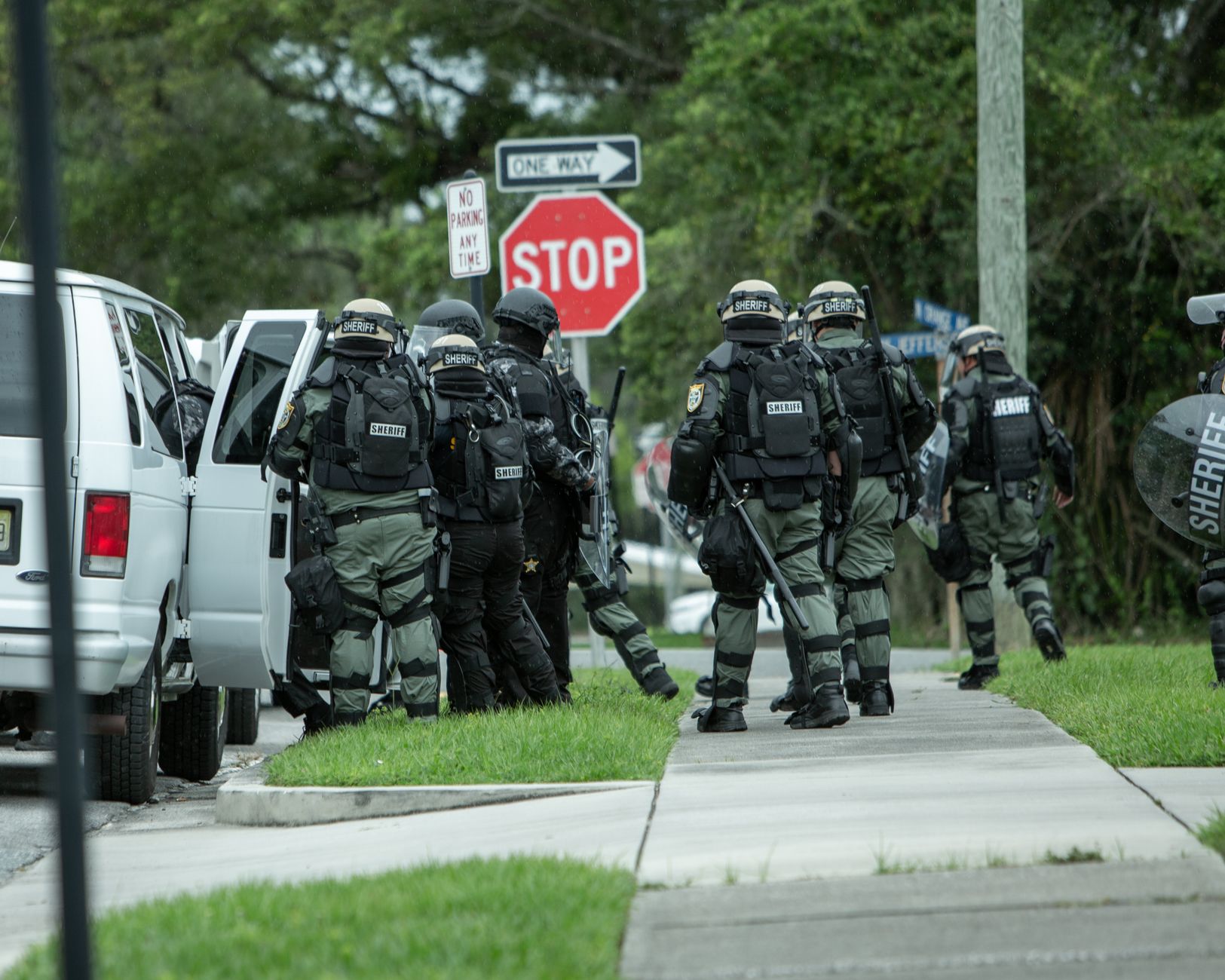
Florida sheriffs push back as Trump, DeSantis seek mass deportations
Key Takeaways
- Several Florida county sheriffs are reportedly refusing to participate in proposed mass deportation efforts backed by former President Trump and Gov. Ron DeSantis.
- Local law enforcement generally cannot carry out federal immigration removals absent formal federal deputization (e.g., a 287(g) agreement) or cooperation with ICE (U.S. Immigration and Customs Enforcement).
- Sheriffs’ refusal to cooperate could slow local enforcement actions, but federal authorities retain the power to arrest and remove people within their statutory authorities.
- The dispute underscores logistical and legal limits to any large-scale removal plan: detention capacity, transportation, immigration court backlogs, and due-process rights remain major constraints.
- For immigrants, the immediate practical effect may be reduced local handoffs to ICE in some counties — but federal enforcement, civil immigration proceedings, and deportation remain possible.
What sheriffs are saying and what that means
It has been reported that a number of Florida sheriffs have publicly resisted directives or political pressure to support wide-ranging deportation operations promoted by Trump and by Governor DeSantis. Some sheriffs allegedly declined to honor ICE detainers or to accept deputization that would let local deputies perform immigration enforcement tasks. Local leaders cited priorities such as focusing on public safety, limited resources, and protecting community trust rather than serving as an immigration police force.
Legally, immigration enforcement is a federal responsibility. ICE (U.S. Immigration and Customs Enforcement) and DOJ (Department of Justice) have the authority to arrest noncitizens for civil removal or criminal violations; local participation generally relies on voluntary cooperation, formal 287(g) agreements (which deputize local officers for federal immigration functions), or other task forces. If sheriffs refuse to cooperate, federal agents can still operate, but implementation becomes more complex: fewer local transports, reduced intelligence sharing, and potential community pushback.
Practical limits to "mass deportation"
Even advocates of large-scale removals face significant logistical and legal barriers. Detention bed space, airfare and transport logistics, coordination with foreign governments for repatriation, and the massive immigration court backlog — currently in the millions of pending cases — all constrain any rapid removals plan. Additionally, people with pending asylum claims, certain visa statuses, or foreseeable relief (like adjustment of status) cannot be summarily deported without due process.
For immigrants in Florida, the immediate human impact varies by county. In counties where sheriffs refuse to cooperate, individuals may face a lower risk of being transferred from local jails to ICE custody after arrest; nevertheless, outreach from federal agents, targeted operations by ICE ERO (Enforcement and Removal Operations), and civil immigration proceedings remain possible. Anyone concerned should know their rights, avoid sharing immigration status with law enforcement without counsel, and contact legal aid or immigration attorneys for case-specific advice.
Source: Original Article